

WiscNet Connections, our annual membership meeting, is our most beloved event of the year — we’ll be back at Monona Terrace in Madison May 10-11, 2027 for WiscNet Connections 2027.
Schedule
Wednesday, April 29, 2026
7:45 am - 8:30 am: Registration and Breakfast (Atrium)
8:30 am - 9:30 am: Welcome to WiscNet Connections 2026 (Atrium)
9:30 am - 10:30 am: Presentation sessions
Leading the AI Transition (Grand Hall) - Cristy Heldt, Mosinee School District; Mia Chmiel, Mosinee School District; Greg Doverspike, Mosinee School District
The Power of Meaningful Leadership: Cultivating Growth at Every Level (Community Room) - Amy Jaeckel, Green Bay Area Public School District
STEAM Roadshow: Traveling STEAM Lab + Teacher Tech Bootcamp (Gathering Room 1) - Brady Mesenberg, DC Everest Area School District
Preparing for a Cyber Incident (Gathering Room 2)- Ben Dumke, Lawrence University
10:30 am - 10:45 am: Refreshment Break
10:45 am - 11:45 pm: Roundtable Discussions
Women in the WiscNet Community (Grand Hall)
SSL Cert (Community Room)
AI (Gathering Room 1)
Cybersecurity (Gathering Room 2)
11:45 pm - 1:15 pm: Lunch + WiscNet Network Update (Atrium)
1:15 pm - 2:15 pm: Presentation sessions
eduroam in Action: A Q&A with WiscNet Early Adopters Using the Wi-Fi Service (Grand Hall)- Amy Jaeckel, Green Bay Area Public School District; John Blohm, Green Bay Area Public School District; Andie Behling, WiscNet; Josh Gorton, WiscNet; Rich Turiel
Protecting Your Organization with a Password Manager(Community Room)-Corey Koltz, CESA 5
Don't get lost in the CyberWoods: Using the Cybersecurity Rubric as Your Compass (Gathering Room 1)- Jennifer Ambrosius, CESA 8
What CAN We Do? A Conversation on Building and Managing CANs (Gathering Room 2)- Steve Schlomann, Waukesha School District; Daren Bauer, UW-Eau Claire; Kika Barr, WiscNet
2:15 pm - 2:30 pm: Refreshment Break
2:30 pm - 4:00 pm:The WiscNet Connections Experience: More Than a Conference (Atrium) - Kevin May, Oregon School District
4:00 pm - 6:00 pm: Reception
Thursday, April 30, 2026
6:00 am- Optional: Morning run/walk meeting at the front of the hotel.
7:15 am- Optional: Women of the WiscNet Community meeting in the Library Cafe.
8:00 am - 8:30 am: Breakfast (Atrium)
8:30 am - 8:45 am: “Business With Bacon” (Atrium)
8:45 am - 9:30 am: State of WiscNet (Atrium)
9:30 am - 9:45 am: Refreshment Break
9:45 am - 10:45 am: Presentation Sessions
SPF, DKIM, & DMARC: What You Don’t Know Can Hurt You (Grand Hall) - Corey Koltz and Dan Johnson, CESA 5
Better Together: Simplifying Security with WiscNet’s Co-Managed Firewall Service (Community Room) - Secure Platform Team & Heidi Genther, WiscNet
WiscNet Research and You: Championing Collaborations & Science (Gathering Room 1)- Dr. David Plonka, WiscNet
IT & Large Scale Building Projects: Takeaways and Lessons Learned (Gathering Room 2)-Jason Loomans, Moraine Park Technical College
10:45 am -11:00 am: Break
11:00 am -12:30 pm: Lunch + Keynote Speaker (Atrium)
The Human Opportunity in an AI-driven World - Bob Jones, Assistant Vice President of Emerging Technology and Support Services in Information and Technology Services (ITS) at the University of Michigan
12:45 pm - 1:45 pm: Making the Most of Your WiscNet Membership (Atrium)
12:45 - 3:00 pm: Mr. Pixels’ Opus: Using WiscNet as a Bridge Between Research and Education Cyberinfrastructure (Gathering Room 1) - John Pederson, WiscNet
12:45 - 3:00 pm: WiscNet members-only workshop — Fortinet or Palo Alto Networks — Must have signed up in advance.
Fortinet (Community Room)
Palo Alto Networks (Grand Hall)
1:45 pm- 2:00 pm: Close with Brian Remer, WiscNet (Atrium)
Keynote Speaker
The human opportunity in an AI-driven world
Humanity First: Becoming Critical, Ethical, High-Leverage Humans in the Age of AI
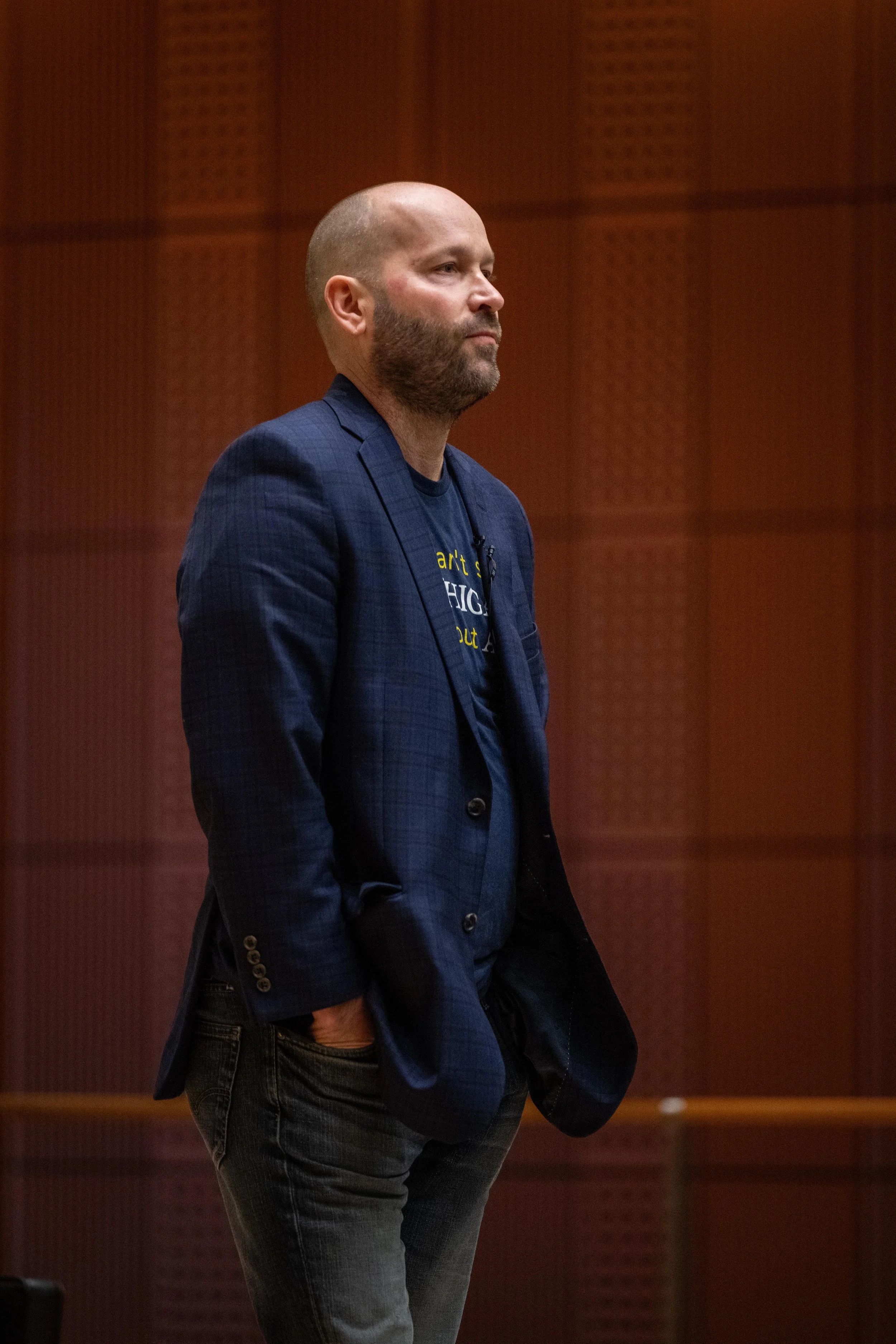
Artificial intelligence has placed humanity at a historically unprecedented inflection point. For the first time, machines can generate ideas, simulate reasoning, and influence belief at scale. This is not simply another technology shift, it is a transformation in how knowledge is created, decisions are made, and power is distributed.
This keynote reframes the AI conversation by putting humans first. Rather than asking how people will adapt to serve AI systems, it asks how AI must be understood, governed, and designed to serve human flourishing.
Moving beyond surface-level prompting tips, this talk equips audiences with strategic literacy: understanding AI’s capabilities, limits, data foundations, risks, and accelerating pace of change. Participants will learn how to sort signal from noise in an exponential information environment, build hybrid human-AI skills, adopt AI ethically and responsibly, and cultivate a mindset of continuous reinvention.
At its core, this keynote is not about technology. It is about stewardship, remaining thoughtful in a world optimized for speed, remaining accountable in systems built for scale, and becoming more fully human in the age of intelligent machines.
About Robert “Bob” Jones
Robert “Bob” Jones serves as Assistant Vice President of Emerging Technology and Support Services in Information and Technology Services (ITS) at the University of Michigan. Over the course of more than 24 years at U-M, he has built a reputation as both a systems-level strategist and an institutional builder, modernizing core technology services while ensuring they remain durable, inclusive, and mission-aligned.
Bob leads a 250-person division responsible for enterprise productivity platforms, end-user computing, campus computing environments, accessibility services, and next-generation AI capabilities serving more than 145,000 students, faculty, and staff. He is currently guiding the development of U-M’s enterprise AI platform, designed to responsibly integrate advanced artificial intelligence into research, instruction, clinical environments, and administration at one of the world’s leading public universities.
Recognized as a leading voice on the future of AI in higher education, Bob focuses on translating rapid technological change into practical, ethical, and scalable institutional strategy. His work centers on three principles: building durable systems that outlast hype cycles, expanding equitable access to advanced tools, and preparing institutions, not just to adopt AI, but to lead with it responsibly.
Questions?
If you have any questions, concerns, or anything else related to WiscNet Connections, contact Maggie Richardson at mrichardson@wiscnet.net or (608) 210-3946.
Questions?
If you have any questions, concerns, or anything else related to WiscNet Connections, contact Maggie Richardson at mrichardson@wiscnet.net or (608) 210-3946.